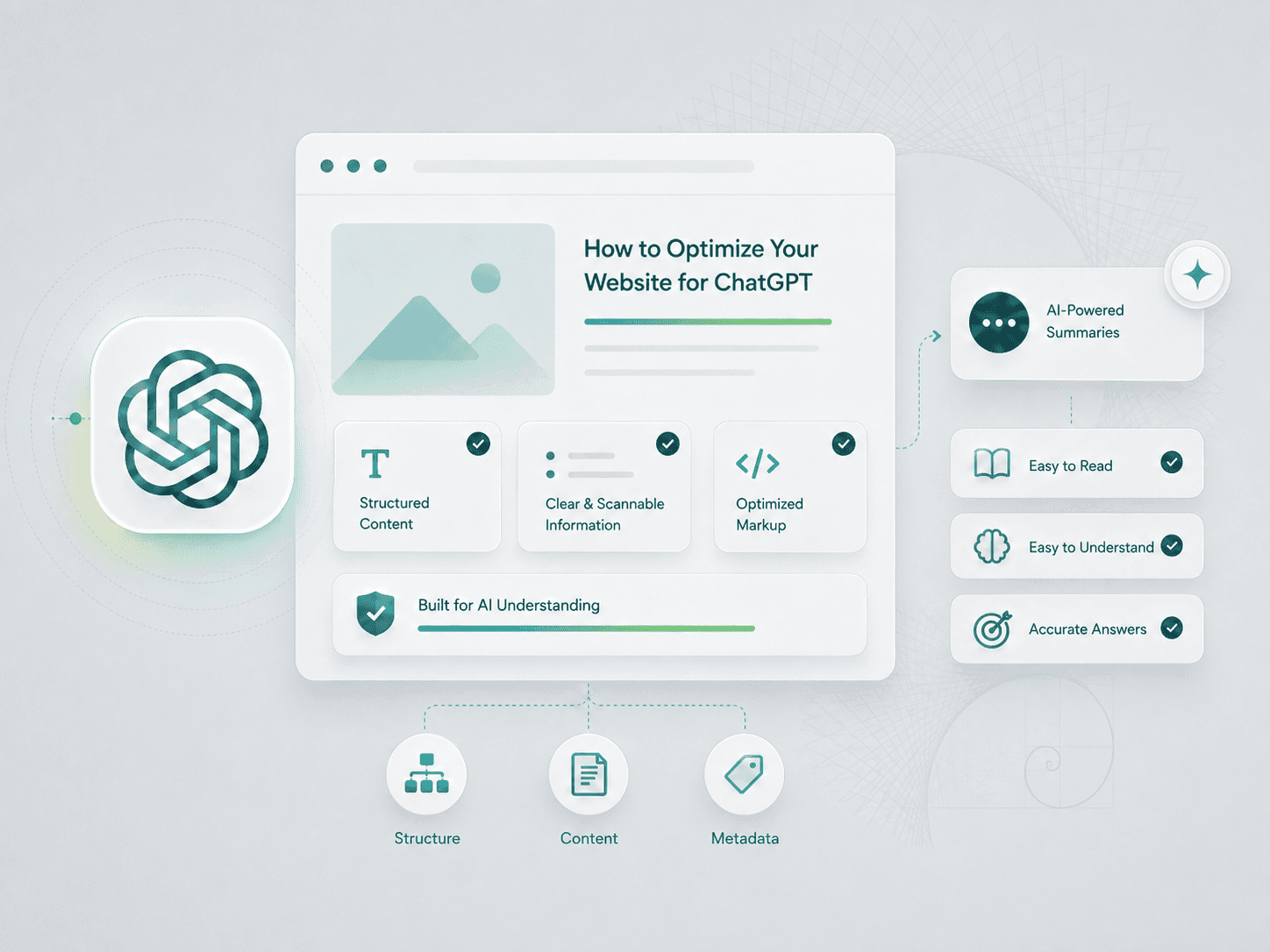
How to Optimize Your Website for Perplexity

How to Optimize Your Website for Perplexity

How to Optimize Your Website for Perplexity

Optimizing your website for Perplexity means writing to be footnoted, not just found. Perplexity shows its sources right under every answer. That means a citation puts your brand inside the answer itself. It's not just one of ten links a person might click. This guide covers what actually gets Perplexity to cite you. It also covers why ranking well on Google only gets you part of the way there.

Shehper Hasan

·

August 10, 2026

·

10 min read

Quick answer

How Do You Optimize Your Website for Perplexity?

How Do You Optimize Your Website for Perplexity?

To get cited on Perplexity, focus on being the clearest and most useful answer to a question. Don't just chase keyword rankings. Perplexity works through retrieval augmented generation, or RAG. It pulls live content from the web. Then it runs that content through a multi step quality filter. Only the sources that pass get used in an answer.

Ranking well on Google helps. Many of Perplexity's citations overlap with strong Google results. But ranking alone isn't enough. Content that answers the question fast, backs its claims with named sources, and stays current tends to get picked. That's true even when it isn't the top Google result.

To get cited on Perplexity, focus on being the clearest and most useful answer to a question. Don't just chase keyword rankings. Perplexity works through retrieval augmented generation, or RAG. It pulls live content from the web. Then it runs that content through a multi step quality filter. Only the sources that pass get used in an answer.

Ranking well on Google helps. Many of Perplexity's citations overlap with strong Google results. But ranking alone isn't enough. Content that answers the question fast, backs its claims with named sources, and stays current tends to get picked. That's true even when it isn't the top Google result.

Confirm crawler access, Perplexity's crawler has to reach your site first. Nothing else here matters until that's true.

Lead with the direct answer. Put the answer first in each section. Add support after.

Earn third-party mentions. Reviews and trusted lists build the kind of trust Perplexity looks for.

Keep pages fresh. Perplexity leans on recent content more than most search systems do.

How It Works

What Does It Mean to Optimize for Perplexity?

What Does It Mean to Optimize for Perplexity?

Perplexity works more like a research assistant than a ranked list of links. It pulls from the live web instead of a fixed index. Learning how it filters and picks sources is the base for everything else in this guide.

Perplexity works more like a research assistant than a ranked list of links. It pulls from the live web instead of a fixed index. Learning how it filters and picks sources is the base for everything else in this guide.

01

How Perplexity Finds Information

  • Uses retrieval augmented generation, or RAG. It pulls live web content instead of relying only on what it learned during training.

  • Runs a multi step quality filter. This filter scores and re-scores results before anything goes into an answer.

  • Checks harder on searches about a specific person, company, or product. It can drop an entire set of results if too few pass the bar.

  • Seems to favor some topics more than others, like technology, AI, and business analysis.

02

How the Process Works, Step by Step

Initial retrieval. Perplexity pulls candidate pages from the live web based on the question.

Reranking. A filter re-scores those pages for quality, clarity, and relevance.

Entity verification. For questions about a specific brand or person, sources get checked more closely.

Citation selection. Perplexity usually picks just a few main sources per answer. Competition for those spots is real.

Learning this process is really the base of LLM optimization. It means working with how the model finds and filters information, not just what your page says.

Comparison

How Is Perplexity Optimization Different From Traditional SEO?

How Is Perplexity Optimization Different From Traditional SEO?

Perplexity overlaps with traditional SEO more than you might think. A good share of its citations come from pages that also rank well on Google. Still, the two disciplines reward different things.

Perplexity overlaps with traditional SEO more than you might think. A good share of its citations come from pages that also rank well on Google. Still, the two disciplines reward different things.

Traditional SEO

Perplexity Optimization

Primary goal

Rank a page as high as possible in results

Primary goal

Become one of the sources cited under the answer

Unit of evaluation

Backlink profile and on-page signals

Unit of evaluation

How easy content is to extract, plus mention consistency

Core signals

Backlink volume and quality

Core signals

Real mentions across reviews, forums, and lists

Success metric

SERP position and click-through rate

Success metric

Citation frequency and citation position

Content structure

Built for skimming and keyword placement

Content structure

Answer stated first, then evidence, then depth

Freshness weight

Helps, but rarely decides the outcome

Freshness weight

Weighed heavily. Perplexity favors recently updated pages

Context

Why Does Perplexity Optimization Matter?

Why Does Perplexity Optimization Matter?

01

How Is AI Search Changing User Behavior?

Perplexity shows its sources right under every answer. That changes what visibility is worth:

  • Being cited builds trust fast, since the reader sees exactly where the answer came from.

  • Buyers often form an opinion of a brand before they ever click through to its site.

  • Perplexity users tend to already be deciding on something. That makes a citation worth more than a typical click.

02

Why Are Businesses Losing Visibility in Perplexity Results?

  • Blocking Perplexity's crawler. A strict robots.txt rule or a blanket bot block can remove a site from the running entirely. This happens no matter how well the site ranks on Google.

  • Writing for Google, not for citation. Long intros and heavy keyword use often bury the direct answer Perplexity is trying to pull out.

  • No presence in trusted outside sources. Good content with no reviews or list mentions gives Perplexity nothing outside your own site to confirm your claims.

Recommendations

What Influences Perplexity's Recommendations?

What Influences Perplexity's Recommendations?

Four things decide whether Perplexity treats your site as worth citing. Almost every tip in this guide helps with one of these four.

Four things decide whether Perplexity treats your site as worth citing. Almost every tip in this guide helps with one of these four.

Crawler Access & Technical Foundation

Perplexity runs its own crawler, separate from Google's. Check that it isn't blocked before you fix anything else. Allow it clearly in robots.txt. Check your server logs to confirm it's actually reaching your pages. Review your firewall or CDN rules too, since they might filter it out along with unwanted bot traffic. Fast load times and server-side rendering matter as well, since a page built heavily on JavaScript can be hard for the crawler to read.

Crawler Access & Technical Foundation

Perplexity runs its own crawler, separate from Google's. Check that it isn't blocked before you fix anything else. Allow it clearly in robots.txt. Check your server logs to confirm it's actually reaching your pages. Review your firewall or CDN rules too, since they might filter it out along with unwanted bot traffic. Fast load times and server-side rendering matter as well, since a page built heavily on JavaScript can be hard for the crawler to read.

Content Structure & Extractability

Perplexity favors content that gives a full answer up front, before moving into support and deeper detail. Headings written as real questions tend to match how Perplexity pulls answers, more than generic topic labels do. Tables, bullet points, and clearly labeled data get pulled out far more reliably than the same facts written as plain paragraphs.

Content Structure & Extractability

Perplexity favors content that gives a full answer up front, before moving into support and deeper detail. Headings written as real questions tend to match how Perplexity pulls answers, more than generic topic labels do. Tables, bullet points, and clearly labeled data get pulled out far more reliably than the same facts written as plain paragraphs.

Entity & Brand Trust Signals

Real mentions of your brand across other sites seem to matter more to Perplexity than backlink count alone. Getting featured in "best of" lists, industry roundups, and review sites like G2, Capterra, or Trustpilot builds the kind of outside proof Perplexity looks for. For local businesses, reviews on Google Business Profile, Yelp, and similar sites play a real role in local searches. Mismatched descriptions of your brand across different sites seem to lower Perplexity's trust in any one version of it.

Entity & Brand Trust Signals

Real mentions of your brand across other sites seem to matter more to Perplexity than backlink count alone. Getting featured in "best of" lists, industry roundups, and review sites like G2, Capterra, or Trustpilot builds the kind of outside proof Perplexity looks for. For local businesses, reviews on Google Business Profile, Yelp, and similar sites play a real role in local searches. Mismatched descriptions of your brand across different sites seem to lower Perplexity's trust in any one version of it.

Content Freshness

Perplexity seems to favor newer content more than traditional search does. It tends to pick recently published or updated pages over older ones on the same topic. This matters most for fast-moving or time-sensitive topics. A page last touched a year ago is at a real disadvantage against a competitor's page updated last month, even if the facts haven't changed much.

Content Freshness

Perplexity seems to favor newer content more than traditional search does. It tends to pick recently published or updated pages over older ones on the same topic. This matters most for fast-moving or time-sensitive topics. A page last touched a year ago is at a real disadvantage against a competitor's page updated last month, even if the facts haven't changed much.

Best Practices

What Are the Best Practices for Perplexity Optimization?

What Are the Best Practices for Perplexity Optimization?

01

Content

Structure Content With the Answer, Evidence, Depth Pattern

Open each section with a full, direct answer in the first few sentences. Follow it with a stat or a cited fact. Then add deeper context and edge cases after that. A reader, or Perplexity's own system, should get a full answer from that opening alone. They shouldn't need the rest of the section to understand it. This same idea, answering directly and fast, is the core of answer engine optimization (AEO).

02

Technical

Get Included in Authoritative Lists and Reviews

Aim to get included in the same industry roundups and "best of" lists that already rank well on Google. Perplexity leans heavily on their clear, ranked structure. Alongside that, make it easy for happy customers to leave reviews on sites like G2, Capterra, or Trustpilot. See our AI Citation Optimization guide for how to build this outside proof systematically. Keep your listings on local directories current too, if location matters for your business.

03

Technical

Implement Schema Markup Strategically

Use FAQPage schema for Q&A content. Use HowTo schema for step-based guides. Use Article schema with clear publish and update dates to support freshness. Use Organization or Person schema to make your identity clear. Schema doesn't guarantee a citation, but it clears up what your content is and when it was last accurate.

04

Content

Build Topical Depth With Content Clusters

One article rarely proves enough expertise on its own. Build a pillar page that covers a broad topic. Support it with focused subtopic pages that answer specific follow-up questions. Link them together clearly. That kind of full coverage is what Perplexity seems to reward over a single stand-alone piece.

How It Works

How Do You Build Long-Term Perplexity Visibility?

How Do You Build Long-Term Perplexity Visibility?

01

Prioritize Web Mentions Over Backlink Volume

Put some effort into earning real mentions, not just links. Getting named in articles, forum posts, and industry coverage counts, even without a link attached. This work is slower than a content sprint. But it's exactly where AI search work pays off, across every AI engine, not just Perplexity.

02

Maintain a Regular Content Freshness Cadence

Set a repeat schedule to revisit your key pages. Update the stats, refresh the examples, and change the visible "last updated" date. Don't treat publishing as a one-time event. Focus first on pages that already get cited but are starting to slip, since keeping an existing citation is easier than earning a brand-new one.

03

Earn Placement in Trusted Third-Party Sources

Take part in real community discussions. Write guest posts for respected industry sites. Aim for coverage in trade publications. All of this builds the kind of outside proof Perplexity looks for. This is a longer game than one outreach push, but the payoff builds up over time.

04

Keep Entity Information Consistent Everywhere

Your brand name, description, and core details should read the same on your own site, on review sites, on directories, and anywhere else you're mentioned. Mismatched info across sources seems to actively hurt your chances of getting cited. It's not just messy, it works against you.

05

Publish Original Data and First-Hand Expertise

Original research, named case studies, and clear author expertise are what set apart content Perplexity is willing to cite. A well-written recap of common knowledge is easy to skip in favor of a source that says something more specific.

06

Monitor Perplexity's Evolving Ranking Signals

Perplexity's approach to ranking and citing is still fairly new, and it keeps changing. A setup that works well today is worth checking again later. Treat this as an ongoing habit, not a one-time fix.

Tools

What Tools Help With Perplexity Optimization?

What Tools Help With Perplexity Optimization?

These tools cover three jobs: checking your technical setup, tracking whether you're getting cited, and seeing how you compare to competitors.

These tools cover three jobs: checking your technical setup, tracking whether you're getting cited, and seeing how you compare to competitors.

Google Analytics 4

Filter for traffic from perplexity.ai. See how those visitors behave compared to your organic and direct traffic.

Google Analytics 4

Filter for traffic from perplexity.ai. See how those visitors behave compared to your organic and direct traffic.

Manual prompt testing

Keep a running list of target queries. Run them in Perplexity on a set schedule. Log whether and how your content gets cited.

Manual prompt testing

Keep a running list of target queries. Run them in Perplexity on a set schedule. Log whether and how your content gets cited.

Cross-platform AI visibility tools

These track citation trends across Perplexity, ChatGPT, and other engines in one place. Useful, since normal SEO tools don't show AI citation data.

Cross-platform AI visibility tools

These track citation trends across Perplexity, ChatGPT, and other engines in one place. Useful, since normal SEO tools don't show AI citation data.

Rich Results Test & Schema Validators

Confirm your structured data is set up right. This helps general SEO too, even though schema alone won't guarantee a citation.

Rich Results Test & Schema Validators

Confirm your structured data is set up right. This helps general SEO too, even though schema alone won't guarantee a citation.

Watch for

What Are the Most Common Perplexity Optimization Mistakes?

What Are the Most Common Perplexity Optimization Mistakes?

Blocking PerplexityBot in robots.txt

Perplexity's crawler runs on its own, separate from Google's. A strict robots.txt rule or a blanket bot block can remove you from citation consideration entirely, even while you keep ranking fine on Google.

Blocking PerplexityBot in robots.txt

Perplexity's crawler runs on its own, separate from Google's. A strict robots.txt rule or a blanket bot block can remove you from citation consideration entirely, even while you keep ranking fine on Google.

Writing for Google instead of writing to be cited

Long intros and heavy keyword structure built for ranking often bury the direct answer Perplexity wants to pull out, even when the facts are solid.

Writing for Google instead of writing to be cited

Long intros and heavy keyword structure built for ranking often bury the direct answer Perplexity wants to pull out, even when the facts are solid.

Ignoring third-party trust signals.

A page can be well written and well structured and still struggle to get cited if there's no outside proof, like reviews or list mentions, backing it up.

Ignoring third-party trust signals.

A page can be well written and well structured and still struggle to get cited if there's no outside proof, like reviews or list mentions, backing it up.

Letting content go stale

Since Perplexity seems to favor newer content, a page left untouched for months can lose ground to a fresher competitor page, even without a real quality gap.

Letting content go stale

Since Perplexity seems to favor newer content, a page left untouched for months can lose ground to a fresher competitor page, even without a real quality gap.

Checklist

How Do You Measure Perplexity Visibility?

How Do You Measure Perplexity Visibility?

There's no standard rank tracker for Perplexity citations. Treat this as a habit built around direct testing, alongside whatever AI SEO reporting you already do.

There's no standard rank tracker for Perplexity citations. Treat this as a habit built around direct testing, alongside whatever AI SEO reporting you already do.

Track referral traffic from perplexity.ai Filter Google Analytics 4 for this as its own channel. Compare how these visitors act next to your other traffic.

Run a repeat query list and log citations Track a set of key queries on a set schedule. Check how Perplexity answers and note when your content shows up.

Compare citation share against competitors Note which competitors get cited for your target queries and you don't. Those gaps usually point to structure, freshness, or trust, not content quality.

Watch which third-party sources get cited. Pay attention to which reviews, lists, or forum posts Perplexity uses alongside your competitors. That's often a clear map of where to build your presence next. Our AI SEO Audit Checklist covers this process step by step 

Frequently Asked Questions

Frequently Asked Questions

Frequently Asked Questions

Not always. Many of Perplexity's citations overlap with strong Google results, so ranking well helps a lot. But a good number of citations come from pages outside the top Google results. That's usually because those pages are easier to extract from or more recently updated.
PerplexityBot is Perplexity's own crawler, separate from Google's. You need to allow it in robots.txt if you want your content considered for citation. Blocking it removes you from the running, no matter how well your site does otherwise.
Yes, but maybe not as the main signal. Real mentions across other sites, like reviews, forums, and industry coverage, seem to carry real weight, sometimes more than backlink count alone. Backlinks still help your Google ranking, which feeds into Perplexity indirectly.
It's not required, but it helps. Schema makes clear what your content is, when it was last updated, and who wrote it. All of that supports the trust check Perplexity runs, even though it isn't a guaranteed path to a citation.
There's no single fixed answer. But a repeat refresh schedule matters more here than with normal SEO. Focus on pages that already get cited but are starting to slip. Give more attention to competitive, high-value pages than to low-competition evergreen ones.
Yes. Run your target queries right in Perplexity to see which sources get cited for a topic. Compare that to your own content to spot gaps in structure or authority worth fixing first.

Author

Shehper Hasan

Chief SEO & AEO Consultant

Chief SEO & AEO Consultant with 15+ years scaling brands across North America's biggest digital marketplaces...

Shehper Hasan

Chief SEO & AEO Consultant

Chief SEO & AEO Consultant with 15+ years scaling brands across North America's biggest digital marketplaces...

Shehper Hasan

Chief SEO & AEO Consultant

Chief SEO & AEO Consultant with 15+ years scaling brands across North America's biggest digital marketplaces...

Related Articles

Chat GPT

How to Optimize Your Website for ChatGPT

Learn how to optimize your site for ChatGPT...

GEO vs SEO

What's the Difference Between GEO and SEO?

SEO and GEO both improve online visibility...

claude

How to Optimize Your Website for Claude

Learn how to optimize your site for Claude...

claude

How to Optimize Your Website for Claude

Learn how to optimize your site for Claude...

All Rights Reserved –  Copyright © 2018-2026 Fibonacci Agency

info@fibonacciagency.com

All Rights Reserved –  Copyright © 2018-2026 Fibonacci Agency

info@fibonacciagency.com

All Rights Reserved –  Copyright © 2018-2026 Fibonacci Agency

info@fibonacciagency.com