
To measure AI visibility, track how often your brand is mentioned or cited across AI platforms, how your brand performance compares with named competitors on the same prompts, and whether that activity turns into real traffic or leads. AI visibility metrics help show where your brand appears in AI answers and how different AI models represent your business.
Most teams can already tell you their Google rankings. Few can tell you how often ChatGPT recommends them, or whether Gemini even knows they exist. This guide covers the real metrics that matter, the tools that actually track them, and a repeatable framework for checking your numbers on a schedule, through Generative Engine Optimization.
Shehper Hasan
·
September 2, 2026
·
11 min read
Quick answer
→
Pick your core metrics first. Citations and mentions matter most. Share of voice against competitors matters too. So does sentiment, meaning how AI describes you, not just whether it does.
→
Use free tools before paid ones. Google Search Console includes traffic from Google’s AI features within its regular Search reporting, while Bing Webmaster Tools provides a dedicated AI Performance report. Start with these first-party tools before adding paid platforms.
→
Set a fixed tracking cadence. Run a small set of manual prompt checks weekly. Review your full reports monthly. Every quarter, review your prompt list and run a deeper competitor comparison.
→
Compare against a real baseline. AI visibility is not fixed. The same prompt can produce different answers across platforms or even across separate runs. Look for patterns over time instead of treating one result as final.
How It Works
01
What AI Visibility Includes
It is not the same as a Google ranking. A ranking shows your position on a search results page. AI visibility measures your brand presence across AI-generated conversations and answers.
02
How It Differs From Traditional Rank Tracking
Traditional rank tracking checks one page against one keyword. AI visibility tracking checks your whole brand against a prompt, across a model’s whole retrieval process. The unit being measured is different, not just the tool.
Comparison
Traditional SEO Tracking
AI Visibility Tracking
What it watches
Rankings for a fixed set of keywords
What it watches
How often a brand appears, gets cited, or gets recommended across a set of prompts
Tools used
Rank trackers, Google Search Console
Tools used
Prompt-based platforms, plus manual testing
Update frequency
Often daily
Update frequency
Often weekly, since answers can shift between runs
Source of truth
One, Google’s own index
Source of truth
Several, and they don’t always agree
AI share of voice is not the same as a Google ranking. It is a comparative visibility metric that shows how often your brand appears across a tracked prompt set compared with competitors.
Context
AI-assisted research has moved from a novelty to a default habit for a lot of buyers. That shift is why measurement matters now, not later.
01
A Growing Share of Research Starts in AI, Not Search
A growing share of research now starts inside an AI assistant instead of a search bar. If you can’t see where you stand there, you’re planning blind.
02
Google Rankings Alone Can Hide Real Losses
Brands that only track Google rankings can look healthy on paper while quietly losing ground somewhere they can’t see. Without AI visibility data, that loss stays invisible until it shows up in the sales pipeline.
Metrics
Five metric groups cover most of what matters. Each group measures a different part of AI visibility, so they work best when tracked together.
The most useful AI search visibility KPIs include citations and mentions, share of voice, AI referral traffic, sentiment and accuracy, prompt coverage, and recommendation rate.
Sentiment and Accuracy
Sentiment and accuracy matter as much as frequency. Being mentioned often with wrong information can hurt more than not being mentioned at all. Check what AI systems actually say about you, not just whether they say anything.
Framework
01
Define Your Target Prompts
Start with ten to twenty questions your buyers would actually ask an AI assistant. Split them into branded and non-branded prompts. Branded prompts show how AI platforms understand and describe your company. Non-branded prompts show whether your brand appears when buyers are searching for a solution, service, or provider. For businesses targeting a specific market, these prompts can also be tailored to local search needs, such as AI SEO in Houston.
02
Choose Your Tracking Tools
Then choose your tracking tools. Combine free first-party sources with one paid platform if budget allows. Free tools cover the basics. A paid platform adds competitor comparison and daily tracking. See the full breakdown in the Tools section below.
03
Set Your Cadence
Set your cadence next. Run manual checks weekly if you’re just starting out. Pull full reporting monthly once your tools are in place. Run deeper competitor benchmarking every quarter.
04
Benchmark and Compare
Finally, benchmark and compare. Log every result against your last check, not just against a single number in isolation. A trend line tells you far more than any one data point.
How It Works
01
Treat It as a System, Not a One-Time Project
A single measurement is a snapshot. A system is what actually shows you whether your GEO work is paying off.
02
Keep Your Prompt List Current
Buyer language shifts, and so do the platforms themselves. Review your tracked prompts every quarter and retire the ones that no longer reflect real search behavior.
03
Watch for Platform Changes, Not Just Your Own Numbers
AI platforms update their models and retrieval methods often. A visibility drop can be a platform shift, not something you did wrong.
04
Connect Visibility Data to Business Outcomes
A high mention count means little if it never turns into a lead. Pair your visibility tracking with your CRM or analytics data whenever you can.
Debunked
•
There’s one tool that shows your full AI visibility. There isn’t. Every current tool, free or paid, covers a different slice of the picture. Combine more than one for anything close to a full view.
•
Clicks are the only metric that matters. They’re not. A citation with no click still shapes how a buyer perceives your brand before they ever visit your site.
•
You can’t measure AI visibility at all right now. You can. It takes more manual work than a Google rank check, but real data exists through both free and paid tools today.
•
More mentions always means better results. Not necessarily. A high mention count paired with weak sentiment or wrong information can do more harm than staying quiet.
Spend less time chasing a single perfect number, and more time building a tracking habit you’ll actually keep up with.
Tools
Google Search Console
Google Search Console includes traffic from Google’s AI features within its regular Web search reporting. It does not provide a dedicated AI Overview visibility report or separate AI visibility score. Use it to track overall impressions, clicks, queries, and landing-page performance.
Bing Webmaster Tools
Includes a dedicated AI Performance report. It shows citation counts, cited pages, grounding query phrases, and visibility trends across supported AI experiences. It’s also free. See our Microsoft Copilot guide for the full mechanics.
Semrush AI Visibility Toolkit
Semrush’s AI Visibility Toolkit tracks visibility score, mentions, citations, cited pages, sentiment, and share of voice across major AI platforms. It also supports competitor comparison, making it useful for seeing where your brand gains or loses visibility against other companies.
Ahrefs Brand Radar
Ahrefs Brand Radar tracks brand mentions, citations, and share of voice across a structured dataset of AI responses and tracked prompts. It is useful for spotting visibility trends and competitor gaps, but it does not represent every AI interaction happening across these platforms.
Manual Prompt Testing
It costs nothing but time. Run your own priority prompts by hand on a set schedule, and log what comes back yourself. Our AI Citation Optimization guide covers how to read what you find.
Watch for
Treating every platform the same
ChatGPT, Gemini, and Perplexity all pull from different sources and update on different schedules. A single combined score can hide real platform-by-platform gaps.
Checklist
Run this on a repeating schedule, not once.
✓
Every week. Run your top five priority prompts by hand across ChatGPT, Gemini, and Perplexity. Log whether you appear and how you’re described.
✓
Every month. Pull your full Search Console and Bing Webmaster Tools reports. Check citation counts and impression trends against last month.
✓
Every month. Review your paid platform’s share of voice report, if you have one. Compare your numbers against your named competitors.
✓
Every quarter. Review and refresh your full prompt list. Add new buyer questions. Retire prompts that no longer reflect real search behavior.
✓
Every quarter. Connect your visibility trend to your actual traffic and lead data. Confirm whether rising visibility is turning into rising business results.
Author


Related Articles
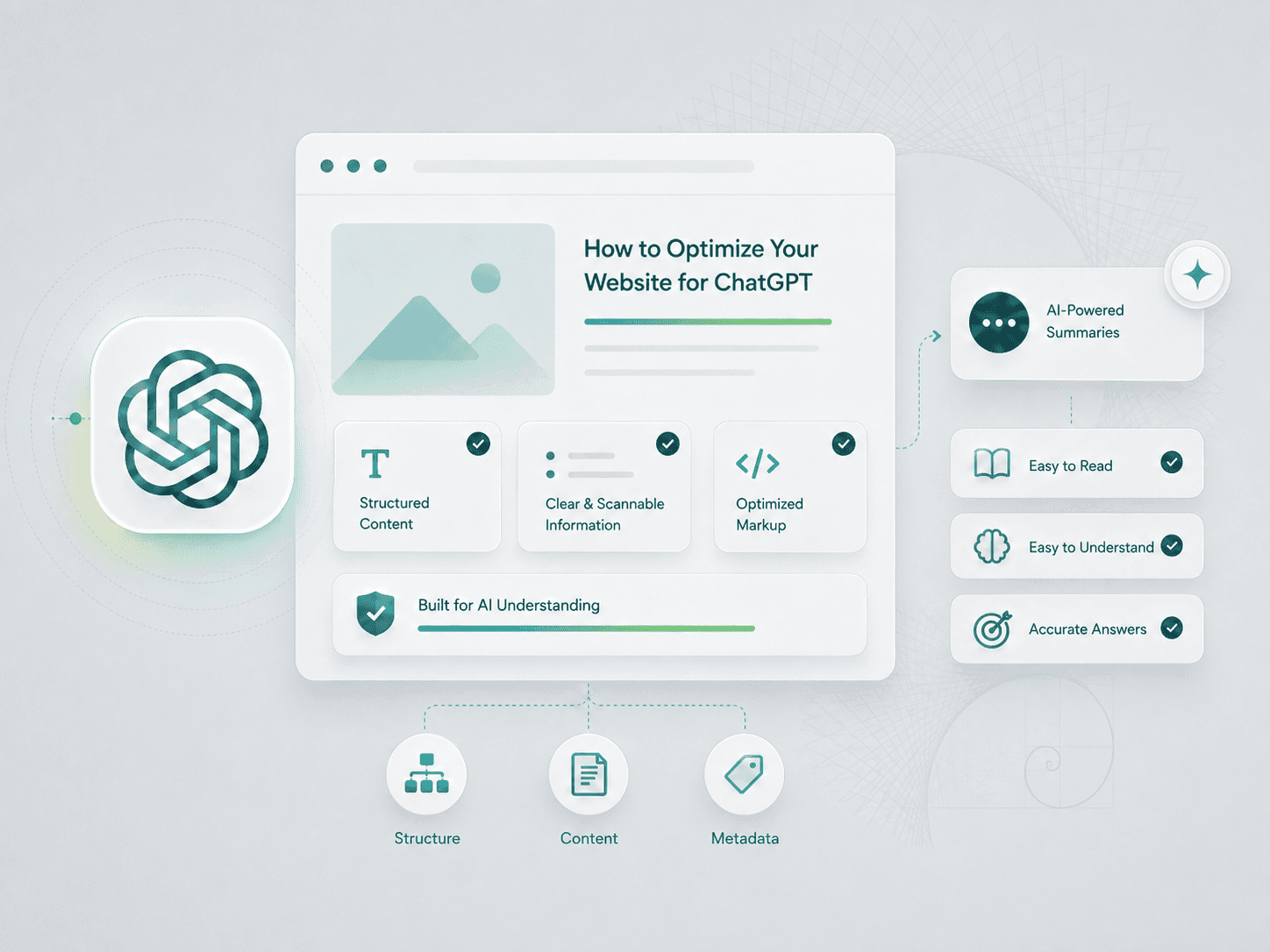
Chat GPT
ChatGPT Search Optimization: How to Get Found in ChatGPT
Learn ChatGPT search optimization strategies...

GEO vs SEO
What's the Difference Between GEO and SEO?
SEO and GEO both improve online visibility...
